
Research & Development
Wilmar’s research and development (R&D) activities support our business operations by improving manufacturing processes, ensuring the consistency and enhancing the quality of existing products as well as developing new innovative products.
Our R&D work is carried out by hundreds of scientists and researchers internationally. The R&D teams are based in various locations worldwide, including Singapore, China, India, Malaysia, Australia and New Zealand.
In line with the Group’s integrated and sustainable growth plan, our R&D teams engage in cross-border collaborations as well as with external organisations to share knowledge and resources to enhance our collective R&D effort.
R&D in China
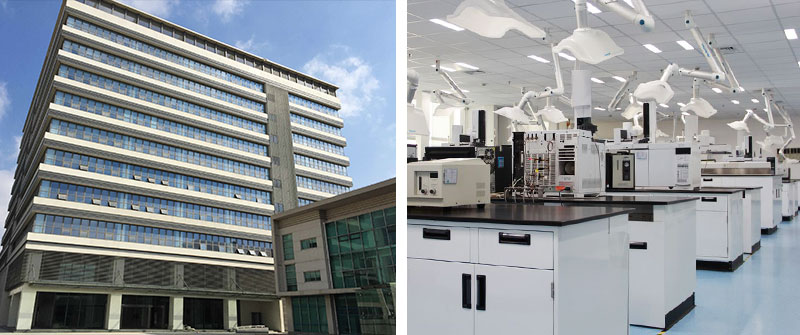
In China, approximately 300 staff members, located across facilities in Shanghai, Qinhuangdao, Lianyungang, and Qingdao, and other locations are dedicated to research and development of new technologies and products. Their work spans several key areas, including culinary oils, specialty fats, proteins, biotechnology, cereals, central kitchen products, condiments, feedstuff, and oleochemicals. This encompasses both new product and process development, as well as pre-research on various cutting-edge technologies.
R&D efforts in China have focused significantly on moderate processing technologies for oils and fats, key technological innovations for health upgrades in specialty fats for the food industry, and six-step precision control technologies for fresh rice.
The R&D operations in China maintain robust collaborations and communications with governmental research institutes, such as the Chinese Center for Disease Control and Prevention, Chinese Academy of Agricultural Sciences, Academy of National Food and Strategic Reserves Administration, as well as industrial associations such as the American Oil Chemists' Society, Chinese Cereals and Oils Association, Chinese Nutrition Society, in addition to well-known universities local and foreign. R&D in China also promotes the development and progress of China's grain and oil industry through a series of initiatives, including the Food Nutrition Innovation Platform and Nutrition Innovation Fund.
The R&D Center in Shanghai has been accredited by the International Olive Council (IOC) as a certified olive oil testing laboratory. It is the first confirmed laboratory in Asia and the only IOC certified laboratory in China as of 2025. The R&D Centre in Shanghai has also won numerous honors, including "High-Tech Enterprise", "National Postdoctoral Research Workstation", "Shanghai Municipal Enterprise Technology Center", and "Shanghai Patent Demonstration Enterprise", as well as being named "National Cereals and Oils Outstanding Scientific Innovation Enterprise" for three consecutive times. Furthermore, the R&D Center in Shanghai has also won the "Grand Prize in Science and Technology Award" by the Chinese Cereals and Oils Association, the "Grand Prize in Science and Technology Award" by the China National Food Industry Association and the "Science and Technology Award" by Shanghai Municipal People's Government multiple times.
R&D in Singapore
In 2018, we established a joint research laboratory with the National University of Singapore (NUS) to conduct cutting-edge clinical nutrition and synthetic biology research to create healthier food products as well as to devise green production technologies for industrial enzymes and biochemicals.
The success of this programme led to a second five-year collaboration with NUS and the A*STAR Skin Research Labs (A*SRL), funded by the National Research Foundation (NRF) in 2023. This programme aims to develop better enzymes and biological strains, improve how natural materials are converted into useful products, and explore unique fats and oils that could be used in everyday applications.
R&D in Australia

To maximise sugarcane yields while minimising nutrient loss from the farm, we invest in research to develop best practices for cane cultivation across our own estates and the broader Australian sugar industry. Our Technical Field Department in Australia plays a key role in developing new cane varieties for growers who supply our mills. This includes a cane crossing programme at Macknade Mill in the Herbert region and a variety selection programme at our Kalamia Mill in the Burdekin.
Today our varieties account for a significant percentage of Australia’s total sugarcane production.


