Projects and Initiatives
PT Kencana Sawit Indonesia (KSI), as a part of Wilmar, continues to demonstrate its commitment to community-based environmental conservation.
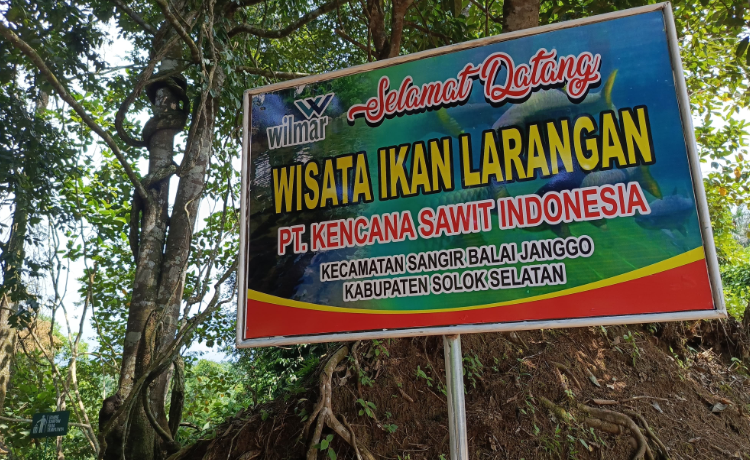
The programme involved the surrounding community in determining the Jujuhan River area, in South Solok, West Sumatra, as Lubuk Larangan—a site located in Wilmar’s business-use rights (HGU) area. Specifically, the area is located in the administrative area of Talao Nagari (village) and has a span of about 0.5 km. Lubuk Larangan is managed by the Talao Nagari community group consisting of 60 participants.
The inauguration of the Lubuk Larangan programme was conducted on April 26, 2025, between Wilmar and the surrounding community. The inauguration was a follow-up to a Memorandum of Understanding (MoU) that had been agreed a few years earlier with several villages around the operational area. This initiative is not only oriented towards ecological conservation but also serves as an effort to revitalise local cultural values that have been proven to support the preservation of natural resources.
Our community-based conservation programme aims to encourage active collaboration between the community and the private sector in maintaining biodiversity and to preserve aquatic ecosystems as well. One way Wilmar is implementing the programme is by developing and strengthening local systems in Lubuk Larangan.
The approach adopts traditional wisdom that stipulates a temporary prohibition period on fishing in certain river areas for a certain period to allow aquatic biota populations to regenerate.
The fishing harvest will be carried out after a two-to-three-year prohibition period to allow populations to recoup. After population conditions have normalised, typically when the fish weigh about three to five kg/head, the catch is estimated to bring in a total sum of around 20 million rupiah. The funds obtained will subsequently be used for the construction of public facilities such as mosques.
Wilmar recognises that successful conservation cannot be achieved unilaterally and must involve all stakeholders, especially local communities as frontliners in protecting the environment. This collaboration reinforces the principle that community-based conservation is more sustainable because it integrates ecological, social and economic dimensions in a balanced manner.
This programme received positive feedback from the local community as it provided ecological and economic benefits in a sustainable manner to the villages. One of the community leaders in South Solok Regency stated that the existence of Lubuk Larangan not only maintains the sustainability of aquatic resources but also strengthens the social cohesion of the community.
The community expressed hopes that this partnership can continue as a tangible manifestation of the synergy between environmental conservation and locally based economic empowerment.
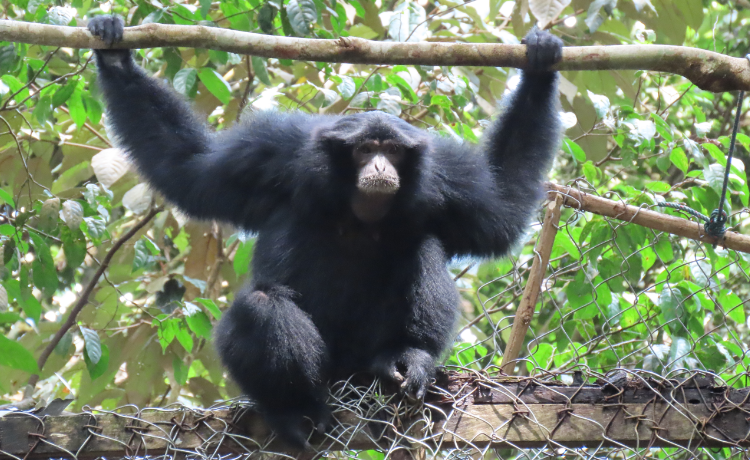
The Siamang (Symphalangus syndactylus) is the largest species of gibbon, found mainly in Peninsular Malaysia and Sumatra, Indonesia. Classified as Vulnerable on the IUCN Red List of Threatened Species, Siamangs face increasing threats from habitat loss, poaching and the illegal pet trade. Their survival depends heavily on healthy forests that provide food, shelter and safe spaces for movement through the canopy.
To support Siamang conservation and species recovery, Wilmar partnered with the Kalaweit Foundation, an Indonesian non-profit organisation dedicated to the rescue and rehabilitation of gibbons. The collaboration focuses on rehabilitating rescued Siamangs and reintroducing them into suitable wild habitats in HCV areas where they can thrive.
This partnership began in 2014, when the Kalaweit Foundation signed a Memorandum of Understanding (MoU) with KSI, a Wilmar subsidiary in West Sumatra. Since then, the MoU has been renewed and extended, reflecting a shared, long-term commitment to Siamang conservation.
Beyond food availability, the forest structure at PT Kencana Sawit Indonesia (KSI) offers the ideal environment for Siamangs. The area is abundant with tall trees and dense canopy cover which is important for an almost entirely tree-dwelling species, Siamangs depend on large trees — typically those with trunk diameters of 40 centimetres or more — for food, shelter, rest and arboreal movement. Other primates also inhabit the area, including the long-tailed macaque (Macaca fascicularis), pig-tailed macaque (Macaca nemestrina) and the endangered mitred leaf monkey (Presbytis melalophos).
In 2015, three pairs of Siamangs took their first leap back into the wild as they were released into Bukit Tengah Pulau, a 300-hectare HCV area — the largest within KSI. A floral survey revealed that 89% of plant species within the area can serve as potential food sources for Siamangs, which corroborated the habitat’s richness and ecological balance.
Over the years, the Kalaweit Foundation has introduced additional pairs to the wild and continues to monitor their progress as they adapt to life in the forest.
To date, 23 Siamangs have been successfully rehabilitated and reintroduced through this ongoing programme, marking a meaningful milestone in Wilmar and Kalaweit’s collaborative conservation journey.
Post-release monitoring plays a vital role in ensuring that the rehabilitated Siamangs can adapt successfully to the wild. Researchers from the Kalaweit Foundation conduct year-long monitoring of the reintroduced individuals to track their health, behaviour and integration into the forest. The findings not only help measure the success of the reintroduction efforts but also guide future releases—bringing the Siamangs one step closer to forming a self-sustaining wild population once again.
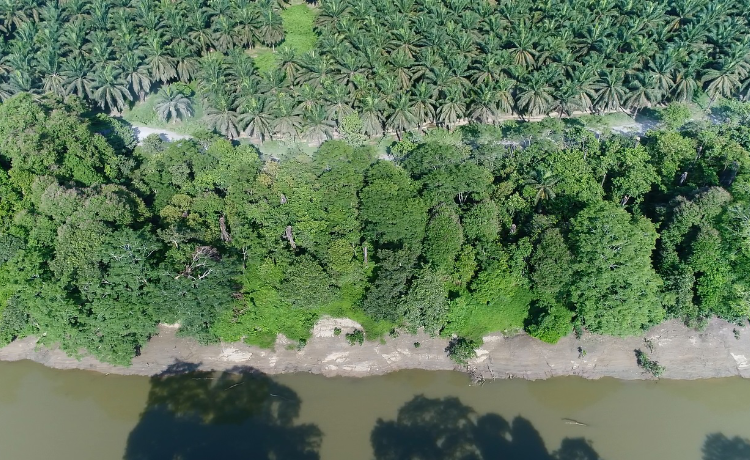
Rivers and streams are prominent features within Wilmar’s plantations in Sabah, forming vital lifelines for both people and wildlife. Riparian reserves—forest buffers along riverbanks—are an integral part of Wilmar’s conservation areas across Sabah and Sarawak.
In Malaysia, state regulations provide clear requirements for maintaining riparian buffers in forestry, while certification standards such as the Roundtable on Sustainable Palm Oil (RSPO) have further shaped best management practices for riparian conservation in oil palm landscapes.
One of Wilmar’s key restoration efforts focuses on the Sungai Segama riparian reserve, a 47-kilometre stretch that was widened from its original 20 metres to 50 metres. This expansion increased the total riparian area from 94 hectares to 381 hectares, further strengthening its ecological function.
A partnership with the Sabah Forestry Department (SFD) further reinforced these efforts. Between 2009 and 2014, approximately 68,000 seedlings of 19 native tree species were planted along Sungai Segama, located within Wilmar’s Sabahmas estate and adjacent to the Tabin Wildlife Sanctuary.
A decade later, the restored riparian area has flourished into a thriving wildlife corridor, serving as habitat for various Rare, Threatened and Endangered (RTE) primates such as the Silvered Langur (Trachypithecus cristatus) and the iconic Proboscis Monkey (Nasalis larvatus).
Building on this success, our Primate Monitoring Project was launched in 2015, together with the SFD, to study primate populations using the restored corridor.
The results showed thriving biodiversity and visible ecological recovery at Sungai Segama as it stands as a testament to the long-term benefits of proactive habitat restoration and responsible plantation management.
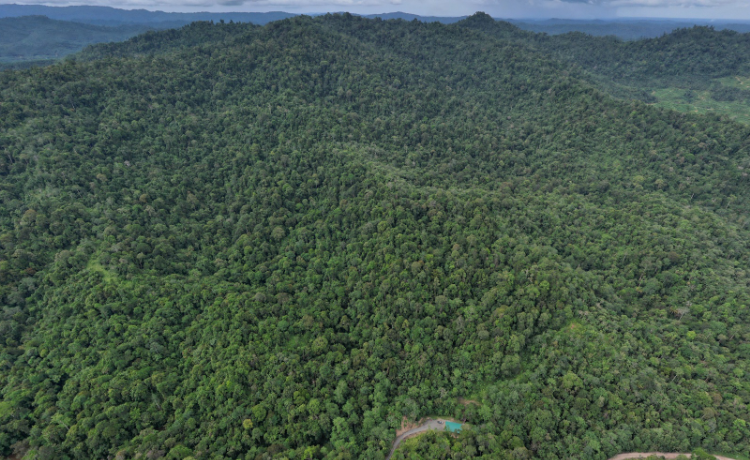
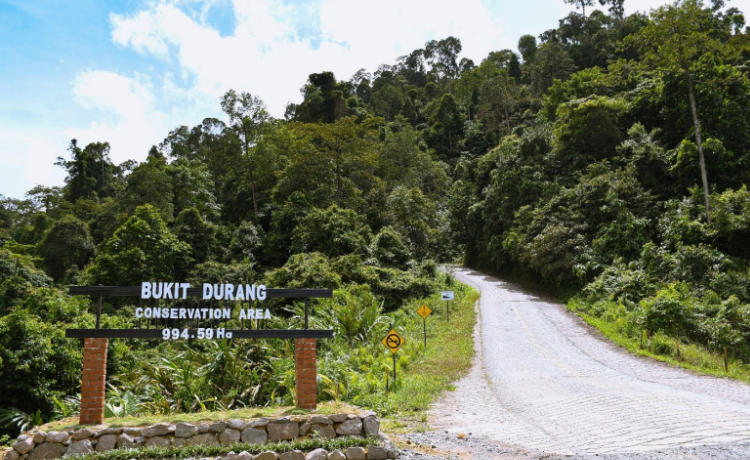
Nestled within Wilmar’s Saremas group of estates in Sarawak bordering Niah, the Bukit Durang Conservation Area (BDCA) serves as an important refuge for wildlife within our operations.
Covering 994.6 hectares, Bukit Durang is the largest remaining forest fragment in the Saremas landscape — a narrow strip of forest stretching 14 kilometres long and about 700 metres wide, set on steep terrain with slopes of up to 35 degrees, making it a challenging yet ecologically valuable area to access and protect.
Situated within the Saremas 2 and Segarmas estates in Ulu Suai, the BDCA lies approximately 149 kilometres from the town of Miri. The surrounding landscape is a mosaic of land uses, including oil palm plantations, smallholder plots, secondary forests, orchards and teak plantations. Once a logged-over forest developed in the 1980s, BDCA today represents a secondary forest ecosystem dominated by tree families such as Euphorbiaceae, Dipterocarpaceae and Moraceae.
BDCA is the only remaining forest landscape within the Ulu Suai district surrounded by extensive oil palm plantations. Its preservation highlights the importance of integrating empirical research and responsible plantation management as a foundation for effective biodiversity conservation within our Sarawak operations.
Despite its fragmented forest, BDCA plays a crucial role in supporting biodiversity within an oil palm-dominated landscape. Surveys we conducted between 2014 and 2015 recorded an impressive diversity of species: 39 species of small mammals, 58 bird species, 24 amphibians, and 41 species of fish, crayfish and prawns.
The presence of these species, including several of conservation importance, underscores BDCA’s value as a critical biodiversity refuge that helps maintain ecological balance and enhances species diversity in the region.
At Wilmar, we believe that meaningful conservation outcomes rely on both scientific knowledge and strong collaboration. Through partnerships with institutions such as Universiti Malaysia Sarawak (UNIMAS), we continue to deepen our understanding of the area’s ecology and refine our management practices. Equally important is our engagement with local longhouse communities, whose traditional knowledge and stewardship play a vital role in protecting and sustaining these natural habitats.
As Malaysia’s oil palm sector continues to progress, conserving natural forest remnants like BDCA’s remains essential. These areas are not only ecologically significant but also stand as powerful reminders that biodiversity and sustainable development can, and must, coexist.
Tucked within the rolling hills of our plantations in the Beluran district of Sabah lies the Sekar Imej Conservation Area (SICA)—a lush, 2,469-hectare expanse of Lowland Mixed Dipterocarp Forest. It is Wilmar’s largest conservation area in Malaysia.
Much of SICA is covered in secondary regrowth forest, a mosaic of pioneer species, scrub vegetation and maturing trees that come together to create diverse forest structures.
The terrain of SICA is rugged and hilly, with slopes that climb beyond 25 degrees. These steep slopes play a crucial role in preventing soil erosion, protecting the land from degradation while keeping the surrounding waterways clean and clear. But beyond its environmental function, SICA shelters a thriving community of wildlife, serving as a reminder of how rich Sabah’s forests are.
To date, 83 species of fauna have been recorded in and around the area, many of which are protected under the Sabah Wildlife Conservation Enactment 1997 and the IUCN Red List of Threatened Species. Among them are some of Borneo’s most captivating residents: the Sun Bear, Lesser Mousedeer and Bornean Yellow Muntjac. The forest canopy also echoes with the calls of magnificent birds like the Oriental Pied Hornbill and the Great Argus.
Conservation at SICA is not only about protecting trees and wildlife—it is about the people too. Wilmar works closely with nearby villages including Kampung Kinadaan, Kampung Mononnod and Kampung Kaiboton, acknowledging that the success of conservation depends on local stewardship. These communities are being trained and empowered to participate in forest protection and monitoring. To further support them, we helped to develop essential infrastructure such as a gravity-fed water system, providing a reliable supply of clean water to the villages.
SICA was jointly established between us and our partners to strengthen biodiversity management within plantation landscapes. To deepen our understanding of the ecosystem, we have partnered with local universities, namely Universiti Sains Malaysia (USM) and University Malaysia Sabah (UMS), on a series of biodiversity research projects.
Looking ahead, Wilmar envisions transforming SICA into a Biodiversity and Carbon Research Centre by 2030, with formal conservation recognition under Other Effective Area-Based Conservation Measures (OECMs). This vision reflects not just our will for conservation, but a belief that coexistence is rooted in science, strengthened by community and guided by care for the land.