
Partnerships and Collaboration
Since 2011 in Indonesia, several studies have been conducted by students from several universities including, Andalas University, Gajah Mada University, University of Indonesia, National University and University of Muhammadiyah Padang and Lambung Mangkurat University in our conservation areas.
The research conducted was typically spread across two regions: Kalimantan and Sumatra.
The table below summarises the type and number of research from Central Kalimantan and Sumatra.
| Research Outputs | Central Kalimantan | Sumatra | Grand Total |
|---|---|---|---|
| Journal | 2 | 0 | 2 |
| Undergrad Thesis S1 | 0 | 16 | 16 |
| Dissertation S3 | 1 | 1 | 2 |
| Thesis S2 | 1 | 9 | 10 |
| Grand Total | 4 | 26 | 30 |
Table 1. In total, 30 research outputs were successfully identified, consisting of scientific publications and academic works across different education levels.
Most scientific journals originated from Central Kalimantan, while all 16 undergraduate theses came from Sumatra. At the master’s level, one thesis was from Central Kalimantan and nine from Sumatra, and at the doctoral level, each region contributed one dissertation, for a total of two.
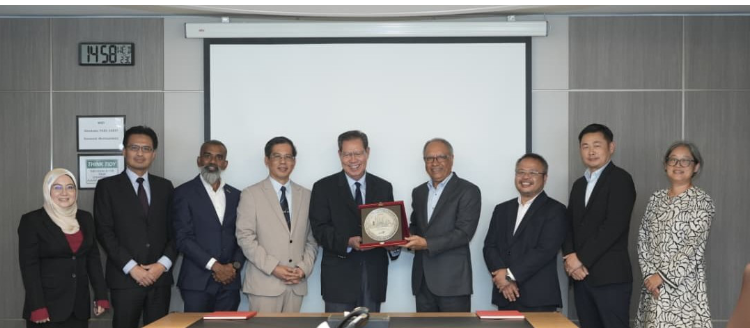
Under this Memorandum of Understanding (MoU), Wilmar’s Saremas estate in Sarawak and Universiti Malaysia Sarawak (UNIMAS) will collaborate to advance research and understanding of biodiversity within oil palm landscapes.
The partnership will focus on improving our knowledge of habitat and microhabitat use; species diversity and distribution; and the ecology of species that are important for conservation. It will also look at furthering our understanding of the local communities’ dependence on natural resources (non-timber forest products or NTFPs) surrounding HCV areas.
This collaboration contributes to the production of indexed scientific publications and the training of graduate students in biodiversity conservation within oil palm plantations.
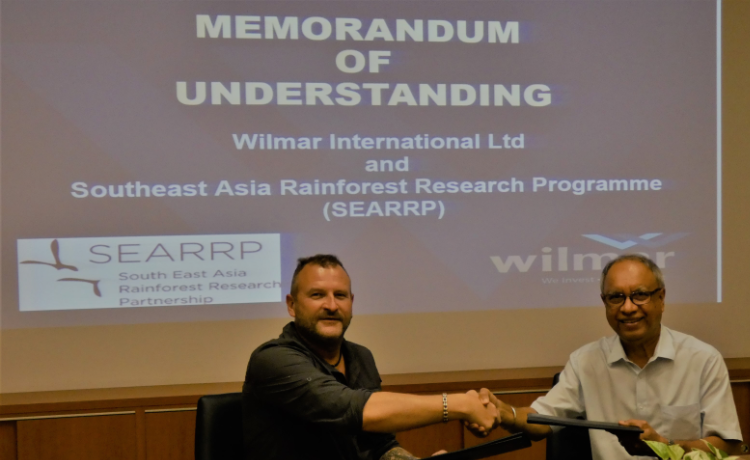
Under this Memorandum of Understanding (MoU), Wilmar and South-East Asia Rainforest Research Partnership (SEARRP) will work together to advance biodiversity research, conservation, and sustainable plantation management across Wilmar’s Malaysian operations.
The partnership supports scientific studies on biodiversity documentation, ecosystem functioning and best management practices through research platforms and experimental plots. It also promotes capacity-building for Wilmar staff and stakeholders, alongside the development of restoration and rehabilitation programmes.
Knowledge and findings will be shared through joint publications, workshops, and seminars to strengthen sustainable practices within agricultural landscapes.
Since 2014, Wilmar has partnered with Yayasan Kalaweit Indonesia to reintroduce Siamangs into the PT Kencana Sawit Indonesia (KSI) HCV area, previously identified as a suitable habitat for the species.
Siamang reintroduction is highly challenging due to their specific diet and need for dense tree cover that is essential for their survival.
As one of the few primates to form monogamous pairs, each couple undergoes a three- to six-month habituation period in a designated enclosure, where they are closely monitored and are gradually acclimatised to their natural environment.
In ensuring minimal disturbance, human activity is restricted around the habituation zone.
To date, 23 Siamangs have been successfully released into our HCV area.
PT Kencana Sawit Indonesia (KSI) began with inclusive dialogues to include the local community. During community engagement sessions, stakeholders at the Nagari (village) and tribal levels agreed upon the common point that conservation areas are best managed collectively.
Then in 2015, KSI and community representatives from two Nagari and ten tribes around the surrounding territory formed a joint agreement. The agreement affirms the commitment of all parties to protect HCV areas in their respective regions.
Through this collaboration, various security and field supervision activities become more effective. Cases of encroachment and land claims, once common, have declined significantly through improved dialogue and cooperation.
The support of each Nagari provides four to five persons to be involved in the protection and management of conservation areas and this partnership continues to be active to this day.
KSI's experience in South Solok is a clear example that community involvement in conservation management not only builds environmental awareness but also strengthens social relationships and creates a sense of belonging to conservation areas.
Wilmar will continue to drive this collaborative approach as part of our ongoing commitment to preserving biodiversity, protecting habitats and ensuring a balance between plantation productivity and environmental sustainability.
Smallholder Programmes
Integrating smallholders into the global sustainable supply chain.

Traceable Supply Chain
Supply chain map and traceability statistics.

Supply Chain Transformation
Driving real change on the ground with Aggregator Refinery Transformation (ART) and Proactive Surveillance.
